Balzamake Rovinj
Rovinj
Unutar prekrasne rovinjske park-šume Zlatni rt – Punta Corrente, u neposrednoj blizini rta Kurent, nalazi se lokacija za ronjenje Balzamake. Do ovoga pristupa plaži najlakše je doći prateći smjerokaze prema restoranu Lovor, koji se nalazi na rtu Kurent. Zatim nastavite šetnicom oko 300 metara u smjeru uvale Škarabica. S lijeve strane šetnice nalazi se niski zid o koji su često naslonjeni bicikli, najčešće prijevozno sredstvo u ovoj zaštićenoj park-šumi. Na kraju zida siđite do kamenite obale koja je dijelom natkrivena krošnjama borova.
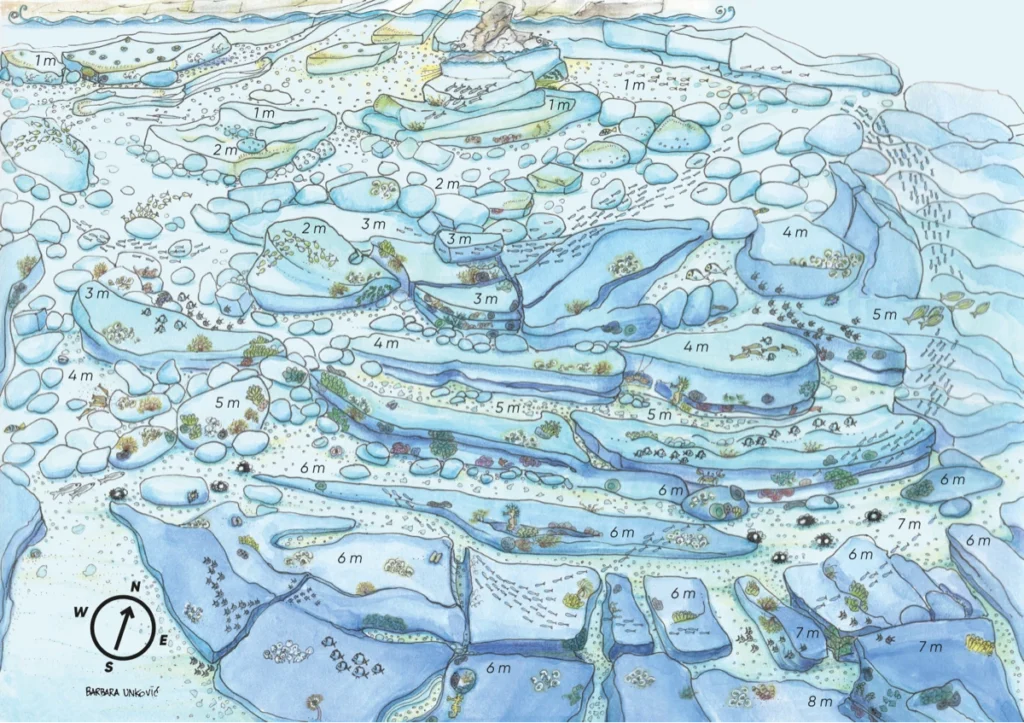
Stijene padaju u stepenicama prema moru, ali ako ih bolje pogledate, primijetit ćete da je najniži dio sunčališta blago zakrivljen u obliku mjehurića i ulazi u more. Odmah do obale nalazi se mala stijena koja viri iz mora. Ako pogledate prema moru, s lijeve strane će vam se ukazati otočići Veliki i Mali Piruz, a s desne otok Sveti Andrija. Tu može započeti vaše istraživanje lokacije za ronjenje Balzamaka. Pazite pri ulasku u more jer su stijene prekrivene glatkim algama i mogu biti vrlo skliske.
Mala stijena koja viri iz mora u sredini ima procjep kroz koji se može vidjeti na drugu stranu. Ako pogledate pažljivo, možda ćete otkriti i morskog puža skrivenog iza crvene spužve ili dlakavog raka koji nosi spužvu na leđima.
Krenite na desnu stranu stijene prema moru. U plićaku se nalaze sitni bijeli obluci koji kako idete dublje postaju velike stijene. Stijene su pokrivene gustim tepihom raznih smeđih i zelenih algi. Posebnu ukras na stijenama čine bjelkasti lepezi savijeni u lijevak, nalik na cvijeće. Ovde se radi o algi Padina pavonica koja je ovde vrlo rasprostranjena. Ovo rovinjsko mesto je kao vrlo živo raskršće za sitne ribe, jer sa svih strana prolaze jata riba.
Nastavite plivati dublje i primijetit ćete dva izdužena stepenika koja izgledaju kao da ih je netko davno odsjekao. Opremljeni su raznim smeđim algama, a krase ih velike žute sumporne spužve pomiješane sa zelenim baršunastim spužvama. Stijenke stepenika su slojevite, a njihove sjenovite pukotine nastanjuju crvene i zelene alge raznih oblika. Između stepenika, dno je posuto sitnim kamenčićima na kojima žive pjegave ježinke, prekrivene školjkama ili oblutcima.
Ipak, najzanimljiviji stanovnici ovog mjesta su morski konjici, koji se mogu naći na padinama stepenica i u malim pukotinama, poput špilja, na dubini od 4 do 7 metara. Njihova boja varira od bijele do intenzivno žute, a mogu biti i iscrtani prugama ili točkicama. Njihove glave ukrašene su razgranatim dodacima nalik rogovima. Plivaju vrlo sporo, plijen love gotovo nepomično i trebaju vrlo dobar vid. Ako im priđete bliže, primijetit ćete da vas pozorno promatraju, najvjerojatnije u strahu. Nije ih lako uočiti jer imaju izvrsnu kamuflažu. Njihova boja ili oblik nalikuje spužvama i algama u okolišu.
Lokacija Balzamaka bogata je migratornim ribama poput cipla, smuđa, komarče i malih glavoča. Među velikim stijenama obitavaju pirke, šiljug, knez, škarpina, baraj i očade. Pri dnu se mogu primijetiti prazne ljušture kunjki i petrovih uha od vrlo sjajnog sedefa, razbacane između kamenih stepenica. Te ljušture pouzdan su dokaz da se u blizini skriva i hobotnica.
Zanimljivosti Ako želite vidjeti morskog konjica, imajte na umu da nije lako uočiti ga čak ni vještim roniocima.Potrebno je određeno vrijeme da se oči priviknu na morski pejzaž kako biste ga primijetili među algama i uočili njegove sitne pokrete koji ga odaju.Izgledaju poput bajkovitih stvorenja i vrlo ih je zanimljivo promatrati, ali ih nemojte dirati niti uznemiravati.Nedavna istraživanja pokazala su da morski konjići razvijaju snažne veze sa svojim partnerima i imaju određene rituale u paru.Ako im se naruši društvena struktura, smanjuje se stopa njihove reprodukcije.Zbog svoje osjetljive biologije i složenosti reprodukcije, oni su zaštićena vrsta u Jadranskom moru.
Važne napomene Lokacija za snorkeling Balzamaka nalazi se unutar zaštitne barijere označene plutajućom užadi. Molimo, imajte na umu da je ovo granica sigurnog i ugodnog ronjenja jer je ovdje velik pomorski promet. Ako želite nastaviti istraživanje dalje, vrlo je važno ostati unutar zaštitne barijere.